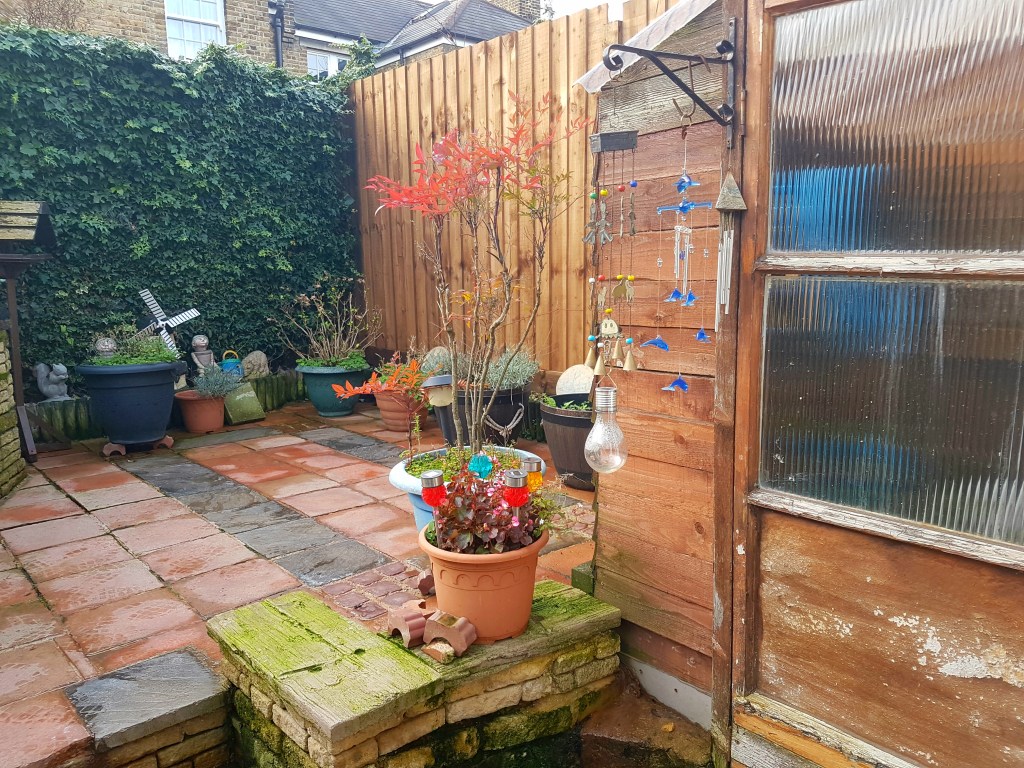
As my interview showed more on the concept of home and home building, Hage became a central reading to my analysis. Hage explores the concept of home-building as “the building of the feeling of being “at home”” and goes on to identify four key feelings which contribute to home-building (2010. pg 417). While the feeling of an open space for opportunities and hope, as well as the feeling of security are just as important, it is the feelings of community and familiarity that can really be seen through the interview (Hage: 2010. pg 418). The feeling of community that Hage discusses is the most important in my interview- my relative was adamant that he did not consider material components as important as the people that he shares the house with. It was a topic I was hesitant to discuss, already knowing that it was difficult for my relative to discuss his wife (a point brought up in the reflection of my process), while my relative may have also been restraining himself from fully talking for just the same reasons. However, my relative still makes references to the home and his family, especially in connection to creating the home together, whether in the garden or discussing the choice of decoration. His emotional attachment to the home stems from the memories of changing it with his wife and family- not alone. While the changes themselves may just be cosmetic, it creates a community bonding moment, which is what my relative is very strongly attached to.
When discussing the main room we were situated in (described by myself as a ‘dining room-living room combination), I had to ask my relative to explain what he was referring to as he pointed about the room. He was already very familiar about the house and the places we were discussing. To some extent, I would attribute time to contributing to his feeling of familiarity about the house, but, alongside that, Hage links in Bourdieu’s theory of a ‘habitus’ (2010. pg 418). A habitus is- to Hage and Bourdieu- “embodied history but, to a certain extent, it is also embodied history” – that is, ingrained dispositions and habits we obtain from our life experiences (Hage: 2010. pg 418). I did not ask about (or know) my relative’s life experiences in depth, nor was he willing to share much from outside the house, so I cannot comment extensively on his habitus, although Bourdieu mentions that “a habitus will aim at home-building” and so my relative has likely influenced the house in ways which I cannot understand.
The relationship between social housing and home-building is not a very wide field of research at the time of writing this, although it could be interesting to explore. My relative clearly does not have very positive views on Peabody Trust, who the house is contracted from, even if he acknowledges that he can’t stop their implemented changes. In this way, he loses some of his own agency on the house and through that, some of his familiarity with it as well.
Twice during the interview I was asked to pause it (both silently and on the record)- while it was for innocent reasons like making a drink or attending to the dog outside, it is the silences on the recording as well as the conversations we had outside it that are significant to consider. It is something that Freund equally considers, with two anecdotes of his own, and considers approaches to silence on the records. Freund writes “As people interacting with others, we find that “silences are particularly disturbing if they disrupt the conversational flow”” on an emotional level while as professionals it is just as troubling- “What happens when our sources… do not speak (to us), or at least not in a way that we can share…?” (Freund. 2016 . pg 262). This is especially evident in the interview as I struggled to transition smoothly from a paused recording, and our conversation outside of it, to restarting the recording- thus I revisit the main theme of the conversation and continue from there. It helped that we had visited the garden on the pause to give a starting point for the recording again as well. Freund discusses several approaches to silence that we should consider, one of which is “Narrators are aware “that they speak through their interviews to a larger audience” by they nevertheless draw a distinction between the stories they tell us and those they tell an anonymous audience” (Freund: 2016. pg 263). This also limits the conversation a little as it is important to remember that both interviewer and interviewee will have different understandings of the recording and what they are willing for it to actually record.
 History & Home