Hindsight is 20/20, as they say.
When presented with the possibilities of this oral history project, I immediately thought of my relative, who has lived in the same house, before I was even born! I have visited his house plenty of times, and it would be easy for me to write about what changes I remember about it, but I was interested in my relative’s perspective of the house, it being much longer than my own.
To explain the house- it is owned as a part of, and by, the Peabody Trust, in an housing estate. My relative has a contract with the Trust (known informally as Peabody Estate) to live in the house, which will pass down to his children upon his death.
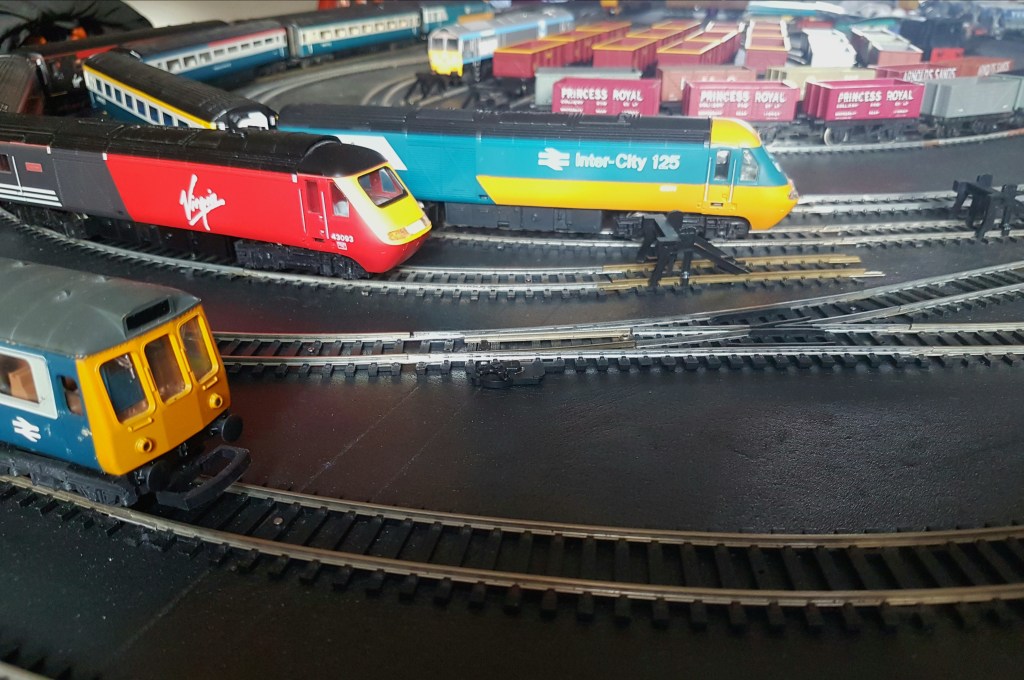
When I presented my idea to my relative, he was agreeable but with one condition- that he remained anonymous. The main example was that I would not refer to him by name (obviously) but also that any mention of other family would also be anonymous- the one instance a name is mentioned, I had to remove it from the transcription. I felt as though this agreement also impacted the interview a little too as, for the most part, my relative was cautious not to mention any names and may have restrained from telling me about many personal stories involving someone (whether intimate or amusing). It also affected what photos I could take, as my relative was nervous about having too much of inside his house posted online- many of my photos are close-ups of his fish or trains (both being his hobbies) while I was careful to have him approve the others I intended to use. Equally, a part of it would also mean that I would not post the audio interview anywhere, only the transcription- there are issues with this, primarily that much of the spoken intonation, an important aspect of oral history, was lost. Therefore, when deciding how to transcribe the interview, I decided to convey the may pauses that my relative took when speaking which could convey much while keeping the flow of the transcription intact as well.
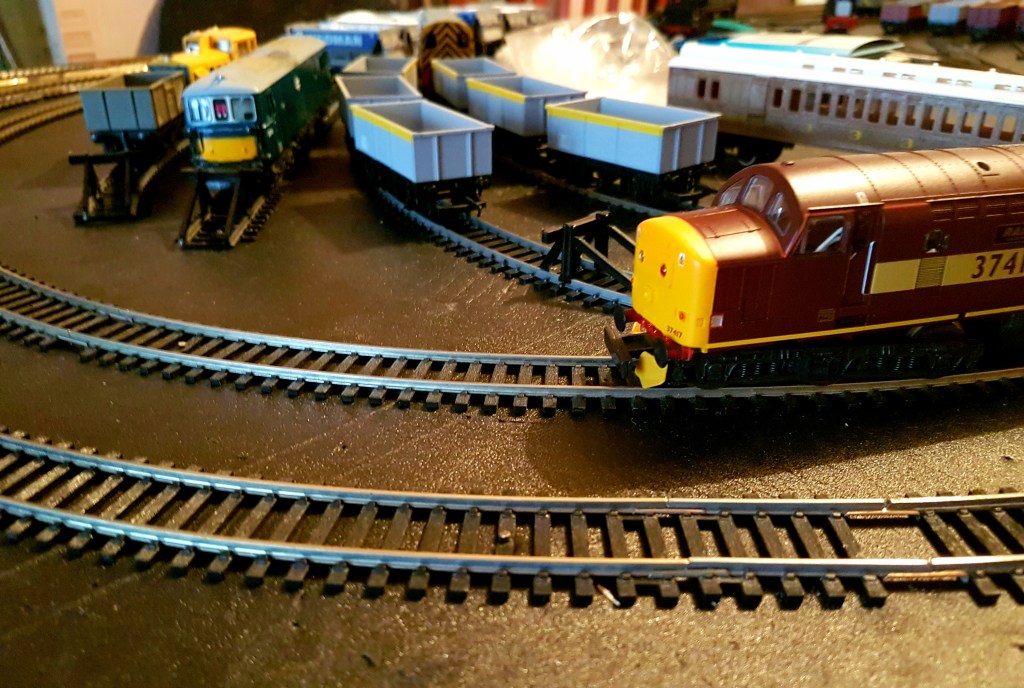
My major idea was along the lines of home-building, how my relative made a home in an estate house, with a focus on some material items of significance. In the interview, however, my relative made some very insightful comments and I found that he was showing more of the idea of a home as a concept, although some of that was still linked to material items in the home as well.
I had never held an interview for oral history before, and so I was quite nervous- I did laugh a lot because of my nerves, which is very apparent when reading the transcript, although I was also hoping it might encourage my relative to speak more. My relative was much more used to interviews and presented his answers in a formal fashion to begin with, although he did relax more as we went on- possibly he was expecting the interview to be much more formal than what I aspired to. He was quite slow and measured in talking, pausing a lot to consider what to say, and thinking of the words to say it. When listening back to the interview, I could hear myself attempting to lead my relative towards what I was hoping for, especially in the beginning section of the interview where I was much more nervous and had set goals in mind, although I did realise this and attempted to reign myself in as we conversed further.
It was important to consider my relative’s emotions when we discussed certain topics however, such as his health issues or his deceased wife- I felt as though it was best to move on as it was clearly sensitive to discuss. It is a familial connection that is important to consider when reflecting on the process, as it absolutely impacted many decisions that I made- such as avoiding certain topics I already knew to be difficult for my relative.
It is also important to note that another relative was also in the same room as us for the first half of the interview (until the first pause) which I felt hindered the interview a little as it wasn’t as private as intended. Additionally, the family dog later came into the room, being the main reason for the secondary pause as well as a distraction at the end. During those pauses in the recording, the second being much longer than the first, we also continued talking, some general conversation along with a little more about the house as we walked through it. The pauses- silences in the recording- are discussed further in the interview analysis itself, being just as important to consider along with what is said.
When looking back on the interview, I was also referring myself to a very comprehensive list detailed by Yow, of both positives and negatives to critique interview skills, as well as the rest of her article (Yow: 2016. pg 174-175). Yow generally disagrees with allowing a third party to remain; “about eight times out of ten, it is best to record just the two of you, without a third voice”- I believe I should have been firmer in setting general rules for the interview to have a more relaxed environment (2016. pg 154). On the other hand, I respected my relative’s cues to stop probing on certain topics and requested clarification on several topics- both verbal and non-verbal which helped the interview to flow better, and for readers of the transcription to understand some topics that occur (Yow: 2016. pg 174).
If I were to hold the interview again, I would absolutely insist that my relative and myself walk around the house instead of remaining in one place, to inspire and remind my relative of more about the house (although I was being cautious of his health issues). I would also accept the natural flow of conversation easier- although to what extent is debatable. Towards the end of the interview my relative touched upon another relative- it was this point that I could feel the interview slowing down and becoming more tired as I felt that it was not entirely relevant (the entrance of the family dog absolutely did not help as it looked for attention). On the other hand, it was just the natural flow of conversation which is one of the features that oral history can capture much better than other documents, and is possibly something to explore as well. Additionally I would absolutely attempt to be a little more professional- mainly in stopping myself from laughing so much!
Equally, when writing up my findings, I was under the impression of a word count in place which unfortunately hindered my discussions. I realised my mistake a while later, but I think it is still evident when reading through.
 History & Home